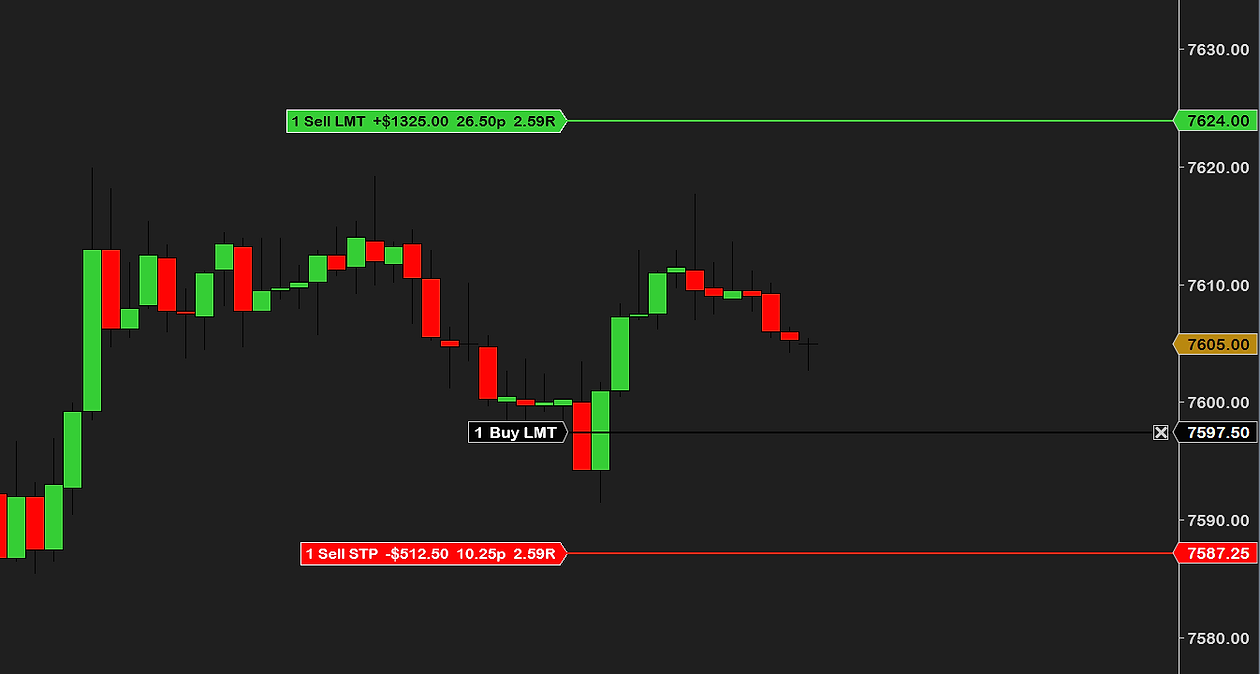
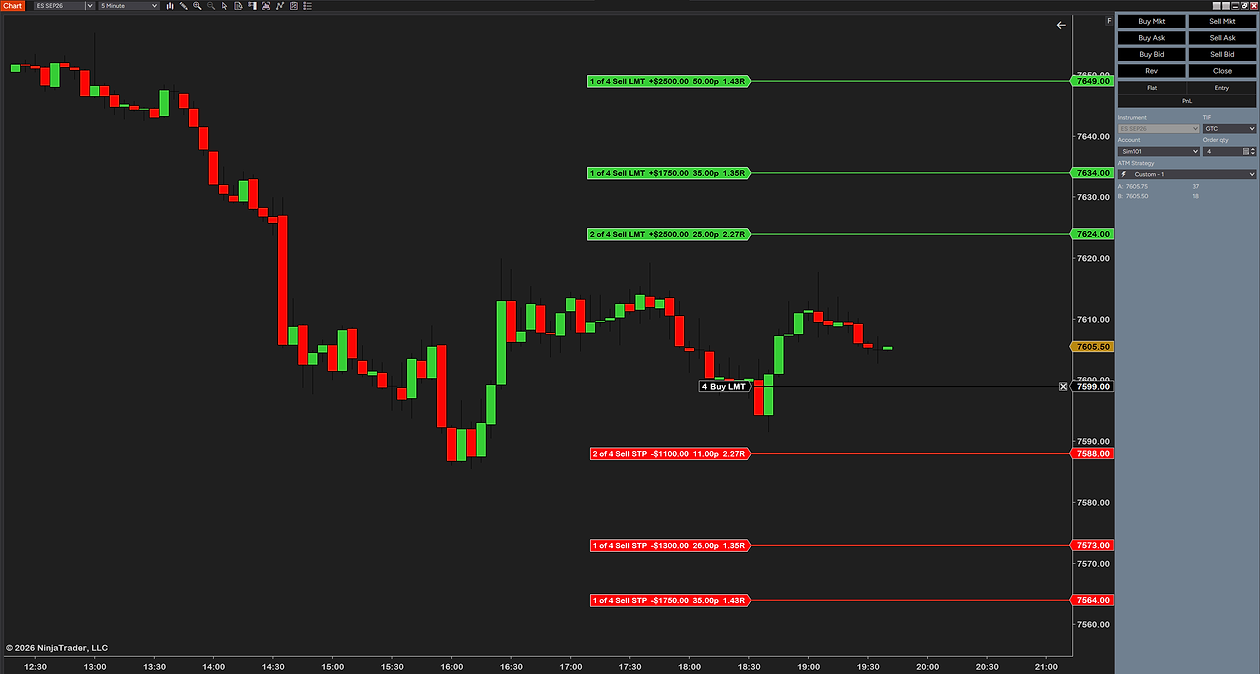
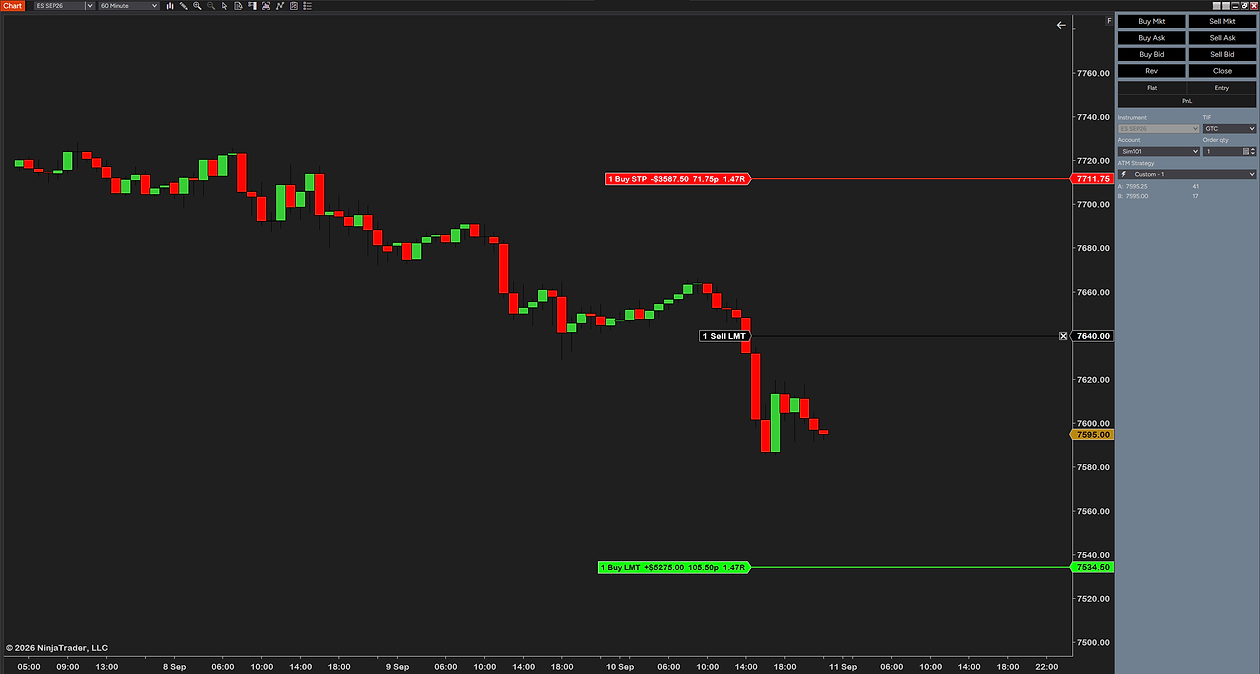
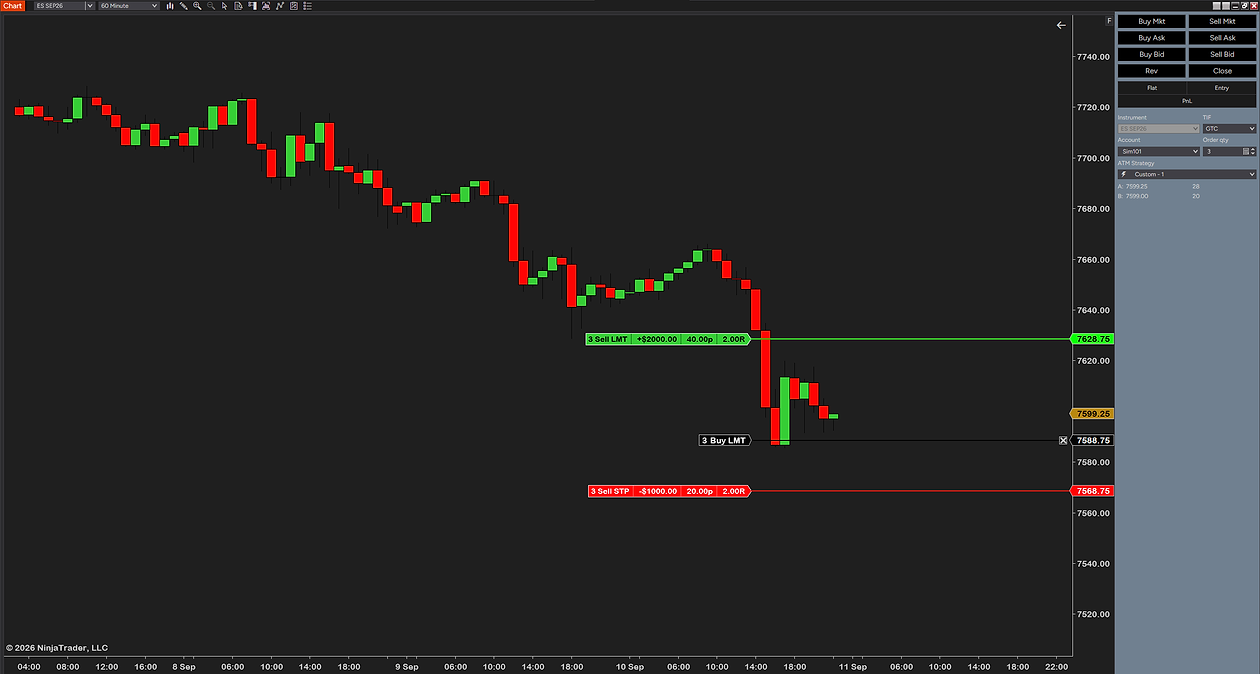
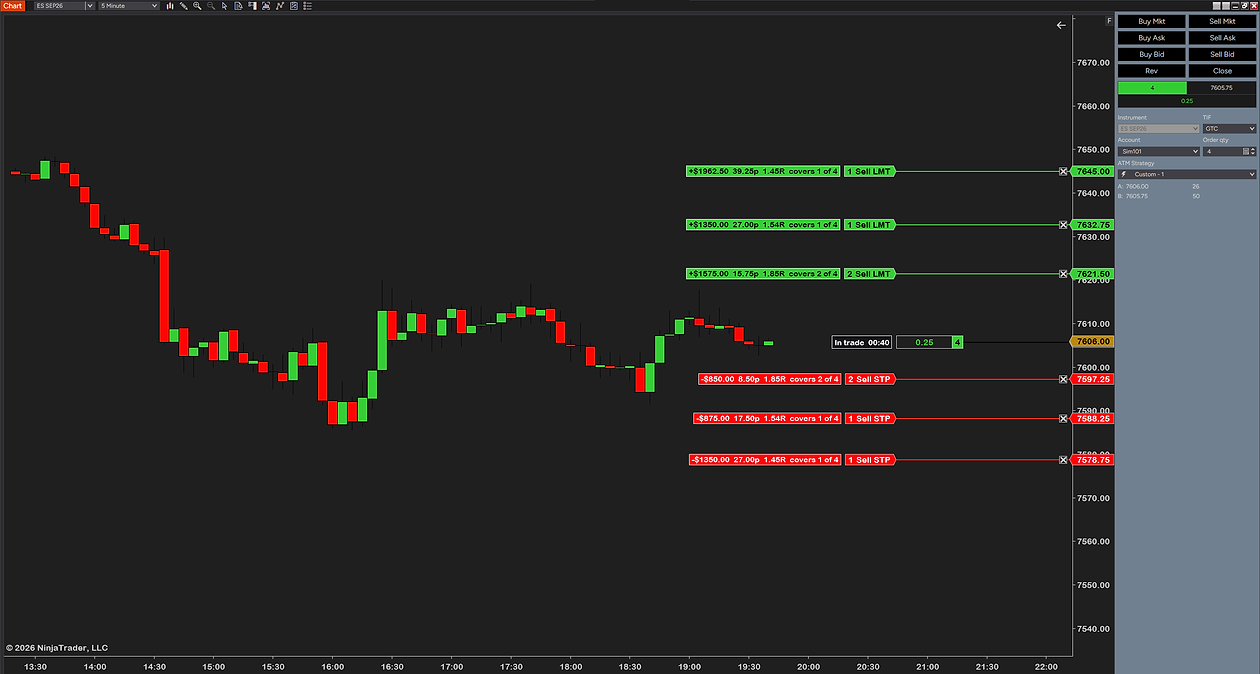
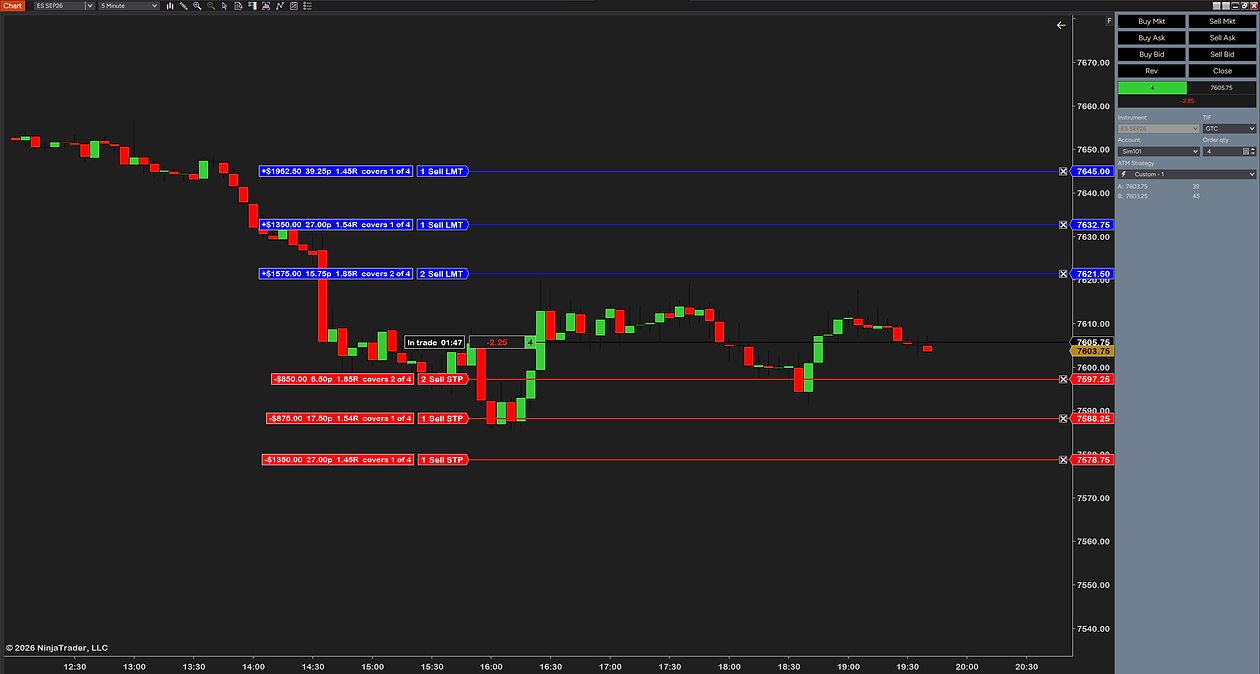
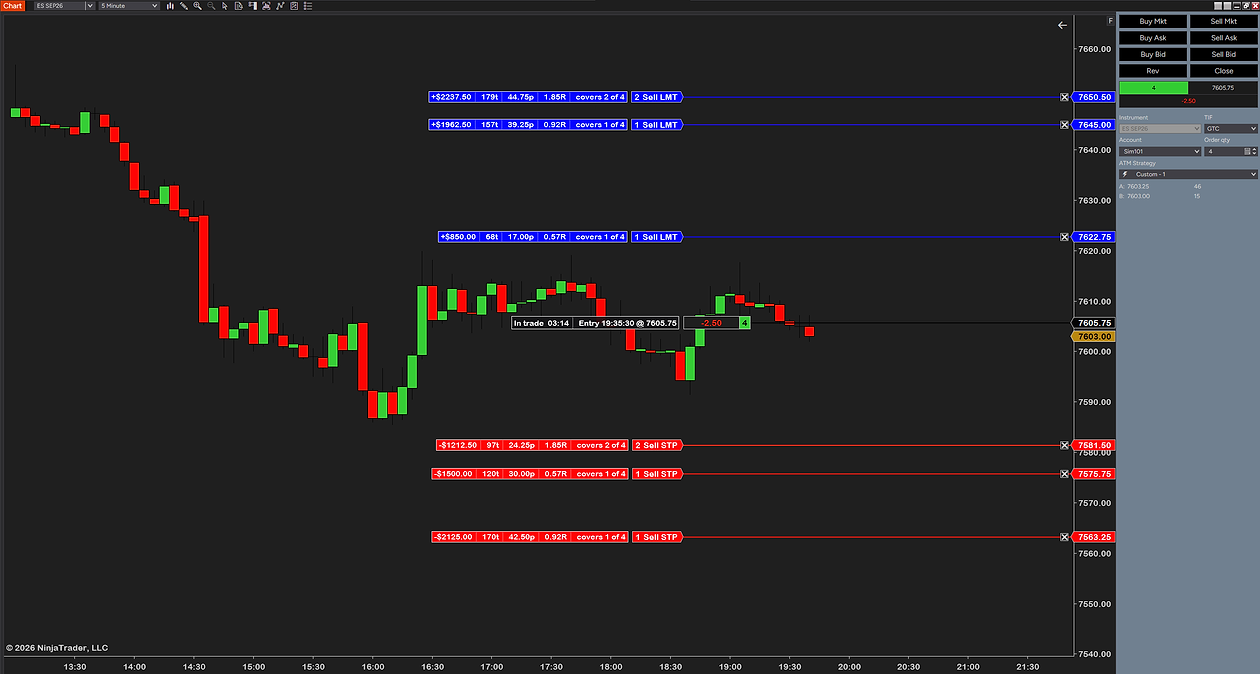
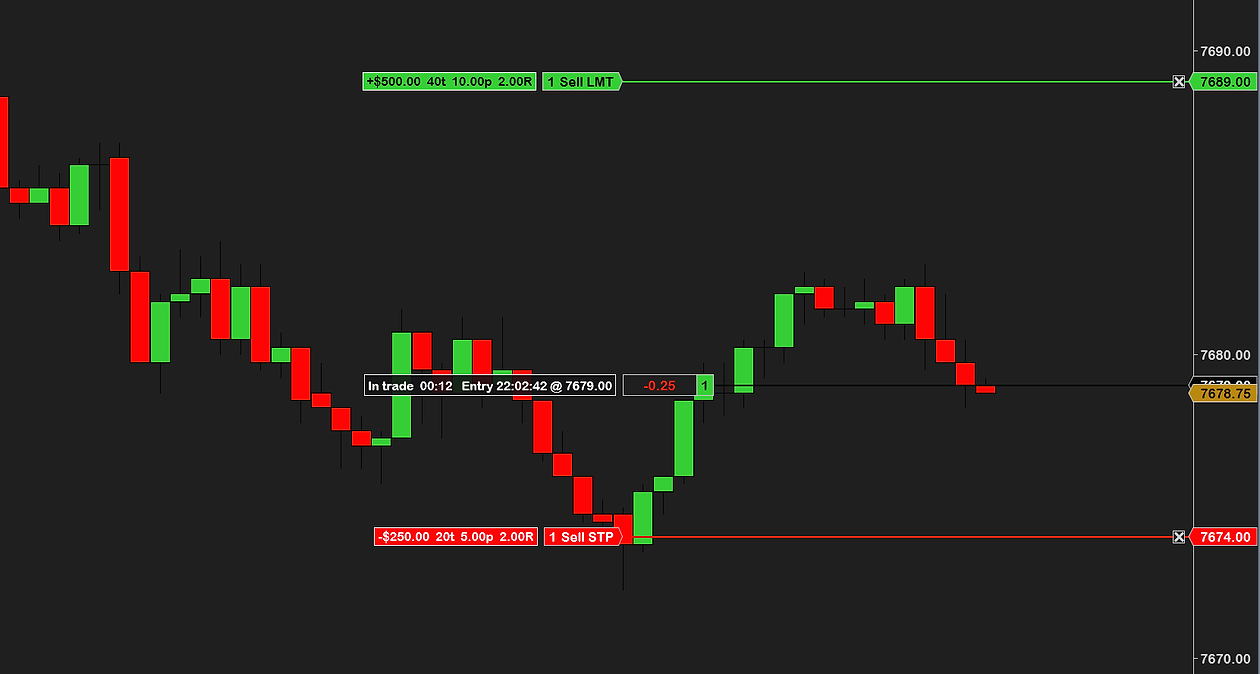
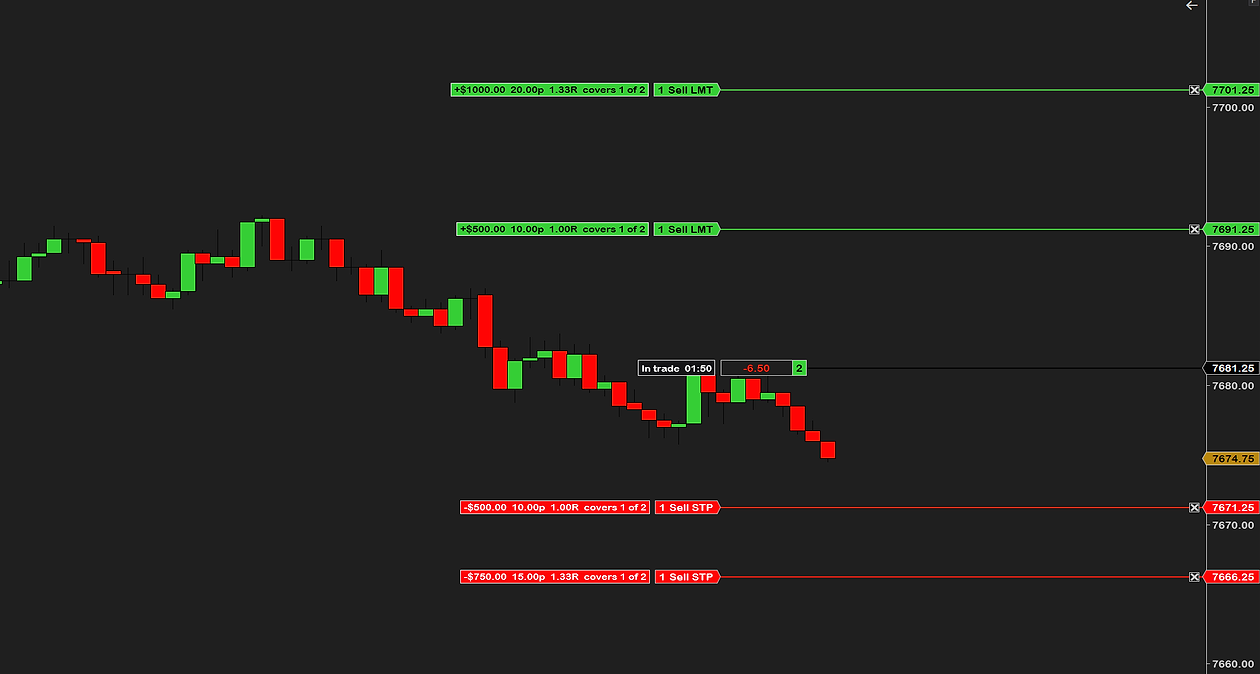
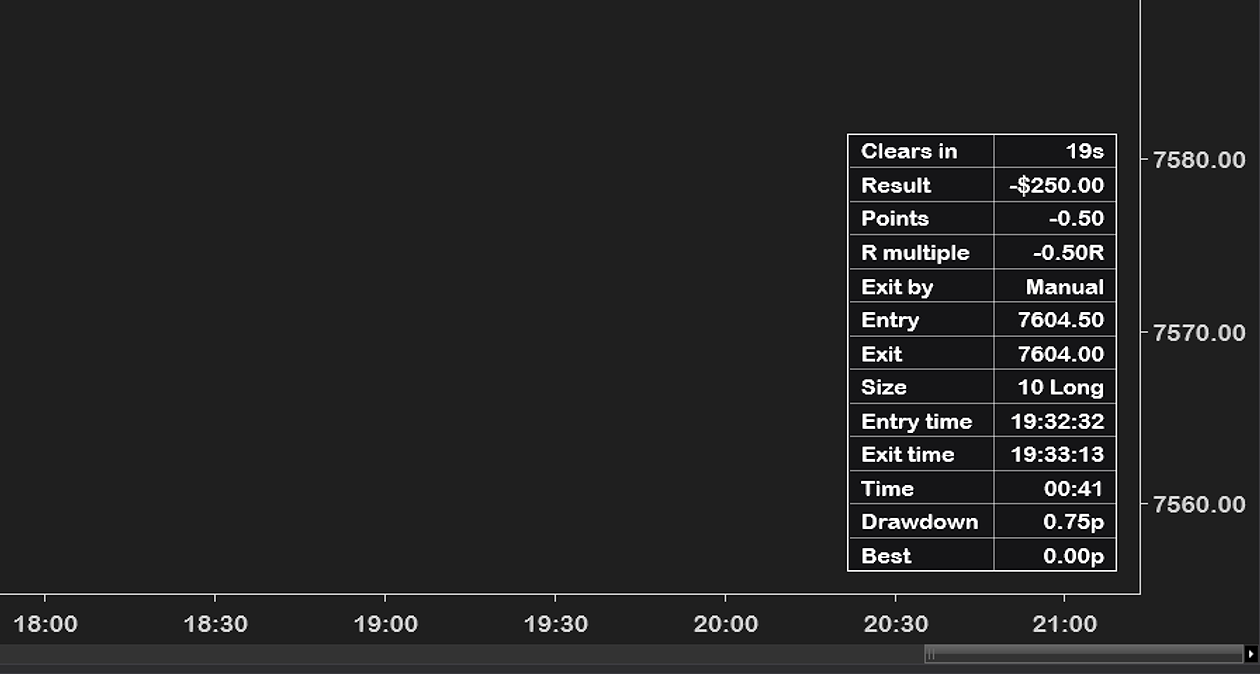
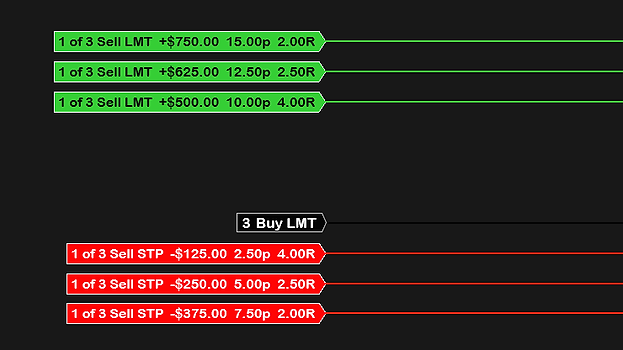
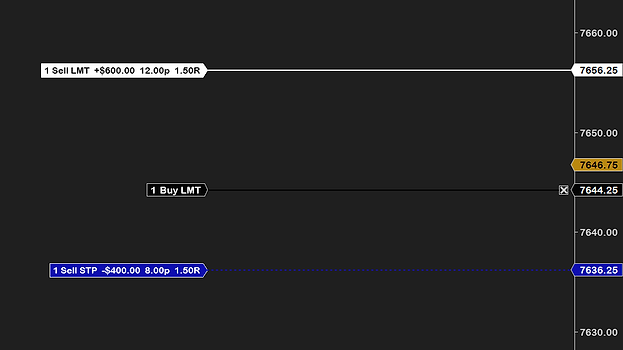
- Platform
- NinjaTrader 8.1.8 or newer (verified on 8.1.8.2), the free tier included. Chart Trader open on the chart (collapsed is fine) — without it ATM Risk Reward deliberately does nothing and keeps checking. One license, every computer you own.
- ATM only
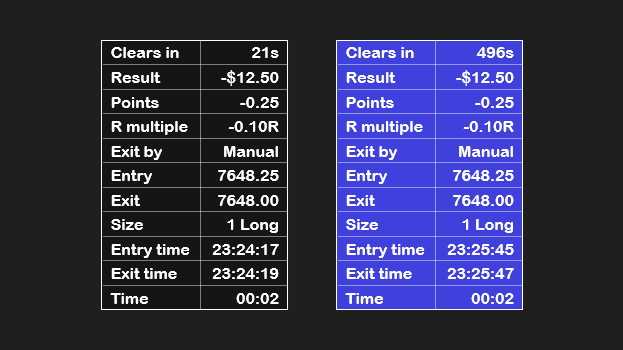
- A stop loss or profit target placed without an ATM strategy is not shown. Manual exits placed with ATM Strategy set to None are not counted in the closed-trade table; the Size row always shows what was counted.
- Not draggable
- Currency templates with several bracket rows, Currency on non-dollar instruments, and Pips on anything but futures show a ? and cannot be dragged: their conversions are not fill-verified. On forex, CFDs and crypto, where pip size varies, Pips lines are not drawn at all.
- Price mode
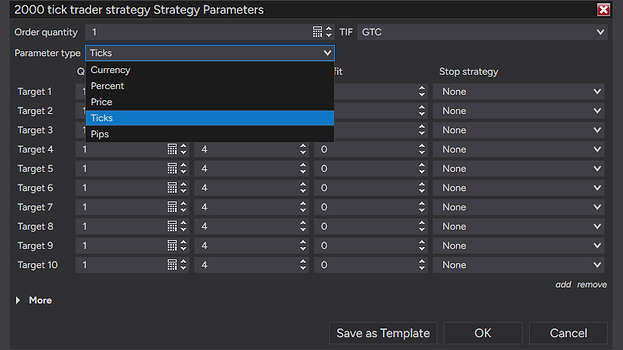
- NinjaTrader reads a Price-mode value as the actual price level. A distance typed there puts your stop loss at, say, price 10.00, the exchange rejects it, and the filled position has no protection. ATM Risk Reward draws no line for an impossible or wrong-side price and tells you, before the fill. If you want distances, use Ticks.
- Partial fills
- The moment any contract fills, the pending lines hand off to NinjaTrader’s own display and the stat tags carry on from there.
- NinjaTrader restarts
- If NinjaTrader is restarted while an entry is working, NinjaTrader discards the ATM strategy but keeps the entry order: it would fill with no stop and no target. ATM Risk Reward shows that order without bracket lines — treat it as the warning it is. Closing NinjaTrader mid-trade also drops the trade record (clock, initial risk, banked partial exits); settings changes, workspace reloads and reconnects keep it.
- Scale-ins and outages
- Adding contracts at a new price, or a data-feed gap during the trade, hides the Drawdown and Best rows for that trade: those two numbers can no longer be stated as whole-trade truth. The dollar result stays exact. Reverse (Rev) trades restart the clock; the reversed-out trade’s result is not shown.
- Instances
- One ATM Risk Reward per chart. Two draw everything twice; order safety is unaffected. On a continuous-contract chart with two live expiries of the same future, the closed-trade table cannot attribute fills between the legs.